


Page 55 - ELITE PLUS MAGAZINE VOL2
P. 55
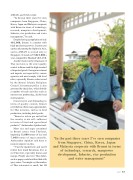
“In the past three years I’ve seen companies from Singapore, China, Korea, Japan and Malaysia cooperate with Brunei in terms of technology, research, manpower development, fisheries, rice production and water management”ASEAN, and 53rd overall.“In the past three years I’ve seencompanies from Singapore, China, Korea, Japan and Malaysia cooperate with Brunei in terms of technology, research, manpower development, fisheries, rice production and water management,” he said.Despite having a population of only 402,000, Brunei is a market with high purchasing power. Income per capita ranks among the highest in Asia, and in ASEAN is second only to Singapore. It stands at US$49,000 a year, compared to Thailand’s $5,110.Another factor in the reluctance of Thai investors is the strict quality control in Brunei and the high standard of imported goods. Foreign investment and imports are inspected by various agencies and must comply with local rules, especially Islamic codes issued by the Brunei Islamic Religious Council. Investment policy is also governed by sharia law, which forbids a number of trade activities such as interest rate profiteering, alcohol and entertainment.Conservative and demanding in terms of quality control, Brunei nevertheless offers many opportunities for Thai investors, such as in food production, including halal goods.“Brunei is rich in gas and oil but the country is not self-sufficient in terms of food and agricultural products,” Ambassador Apichart said.Most rice and sugar consumed in Brunei comes from Thailand, importing 32,000 tonnes of rice and 7,000 tonnes of sugar annually. Ambassador Apichart said there is room to improve on this.“Visit the market here and you’ll realize how much Bruneians love to eat Thai fruit, especially durian and mango. People also love Thai dishes such as papaya salad and fried fish with spicy sauce. You might say the number of Thai restaurants is small, but 10Elite+ 53


