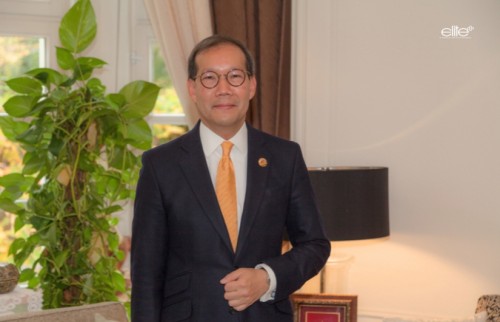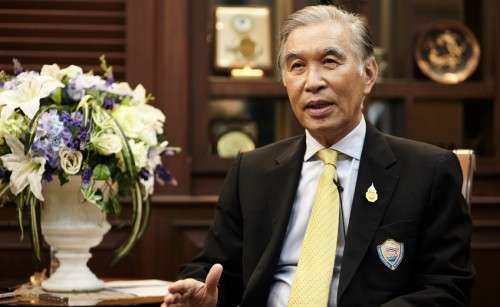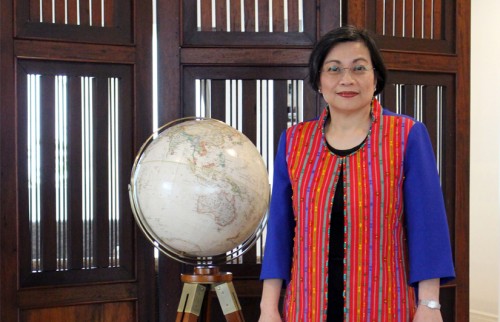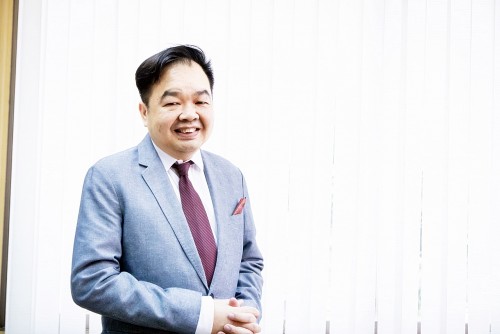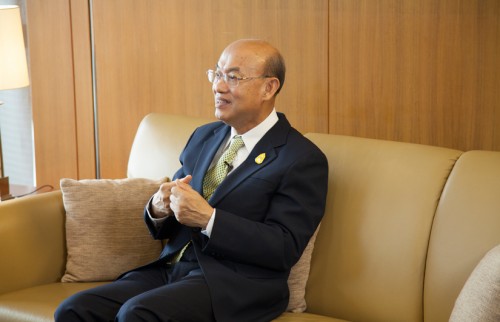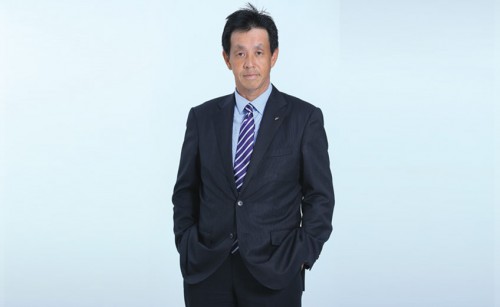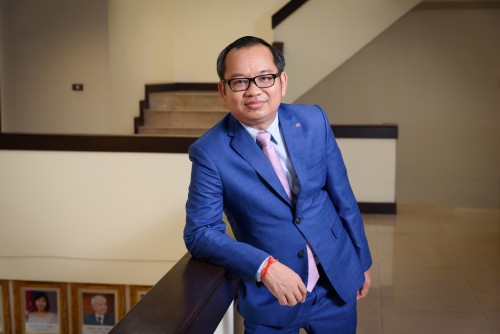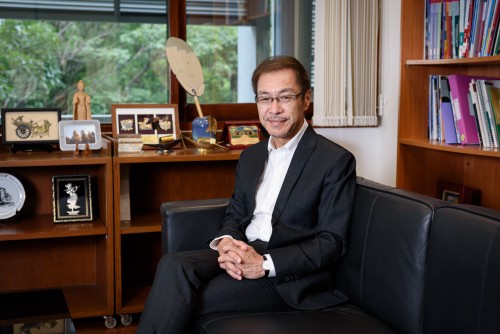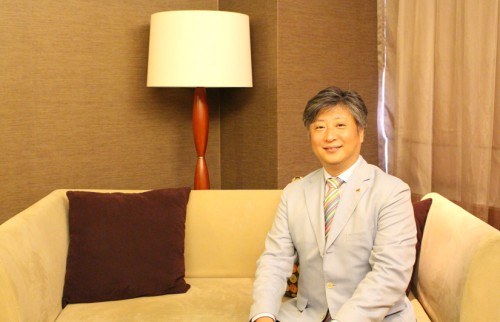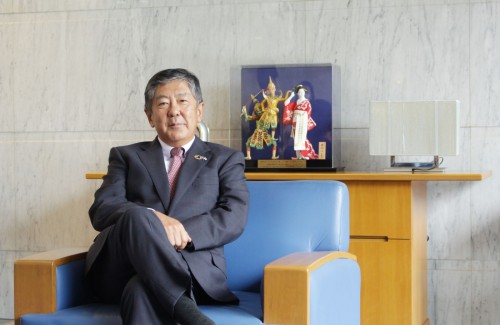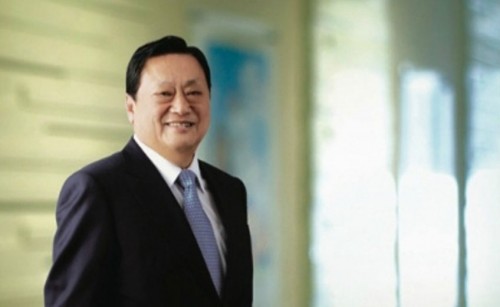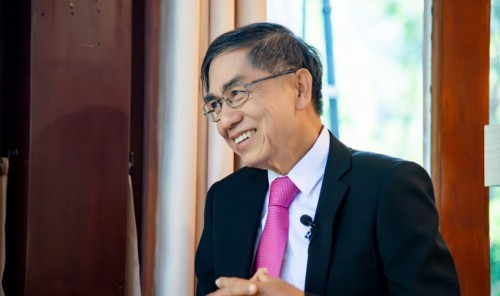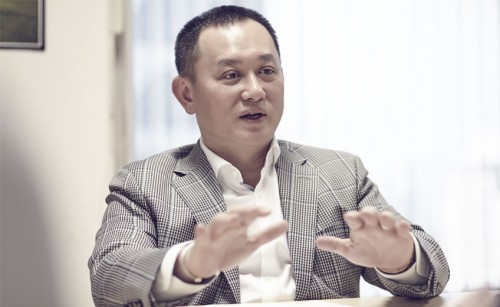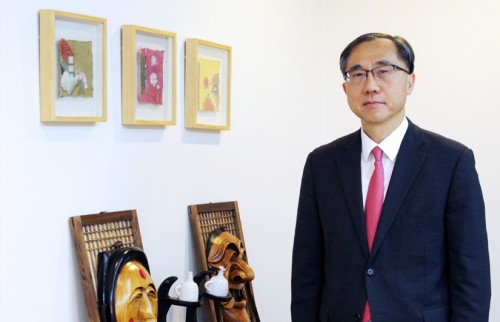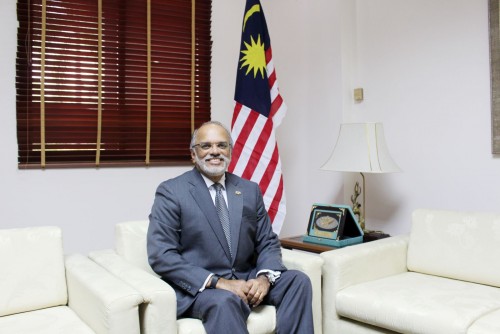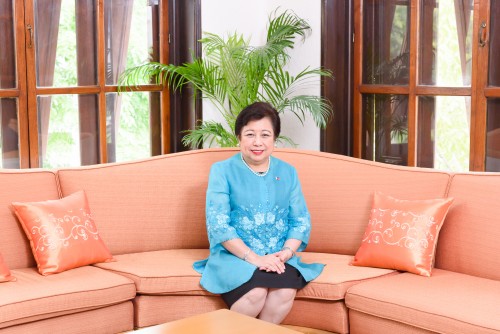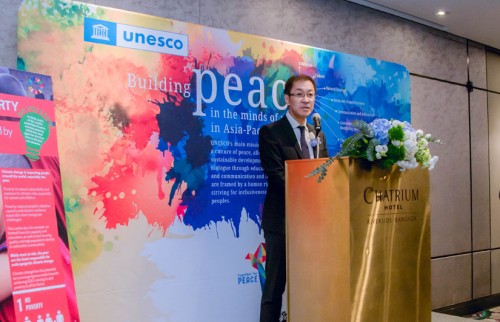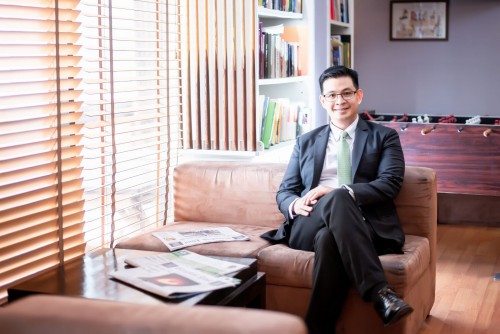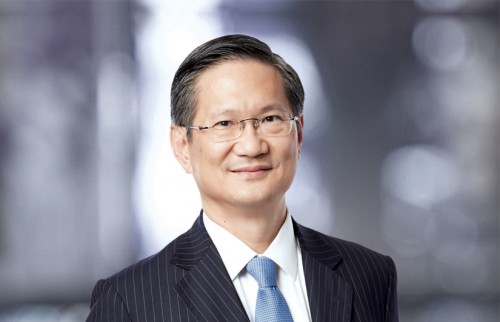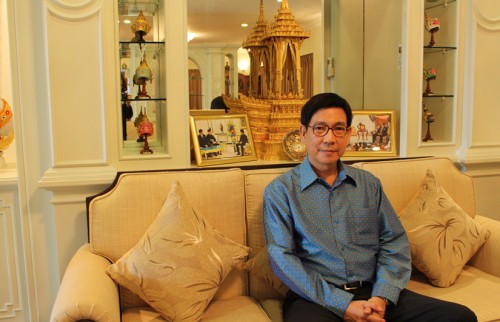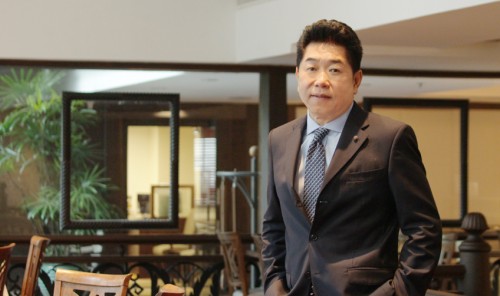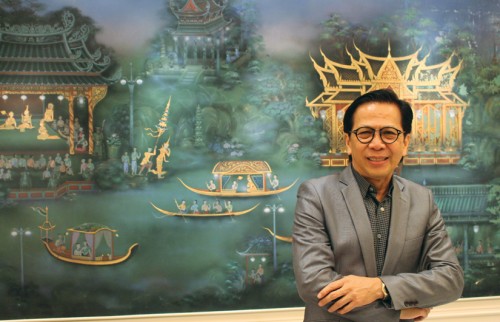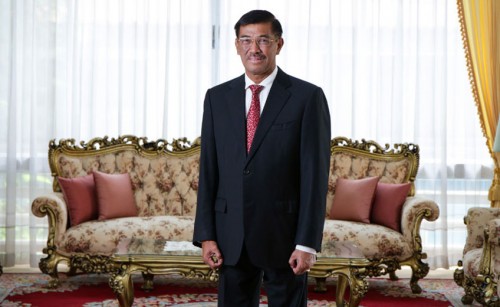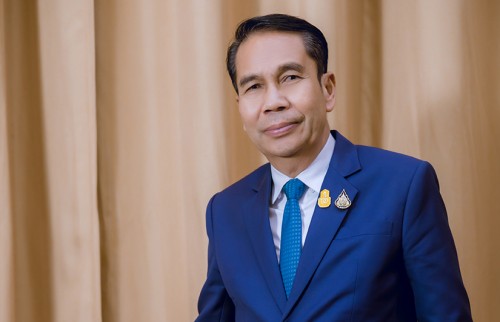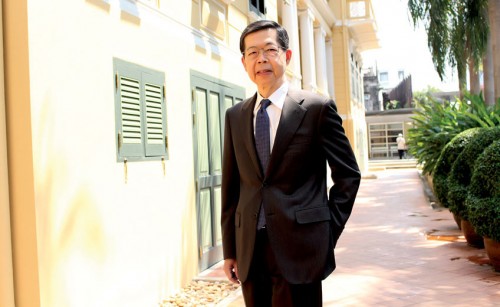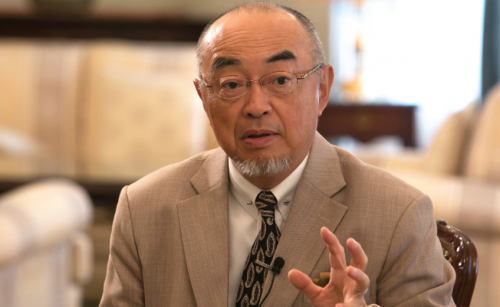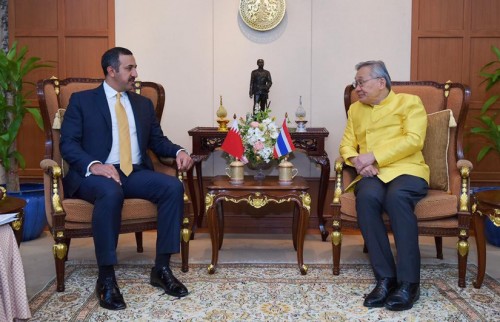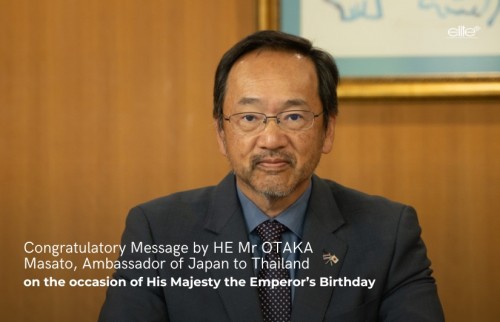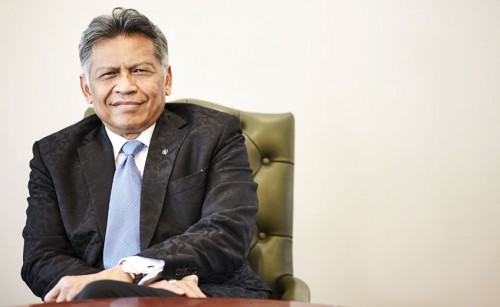


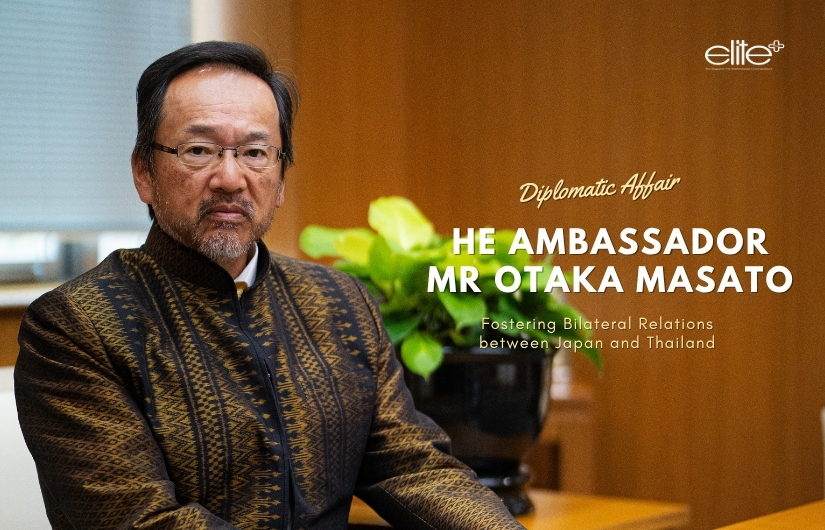
In 2024, HE Mr OTAKA Masato, Japan’s ambassador to Thailand, returned, marking his second assignment to the Kingdom. A seasoned diplomat with extensive international experience, he has particularly strong ties with Thailand, having served previously for three years here, beginning in 2009. Recently, I caught up with him to discuss his plans for continuing to build even stronger ties between our two countries.
Ambassador Otaka joined Japan’s Ministry of Foreign Affairs in 1986 and has since held a variety of important positions throughout his distinguished diplomatic career. After serving in several key posts in Tokyo and abroad, he assumed his current position as Ambassador to Thailand in 2024, marking his second assignment to the country.
Could you give us some background of Japan Thailand relations?
The relationship between Thailand and Japan began more than 600 years ago with exchanges between the Ryukyu Kingdom and the Ayutthaya Dynasty, and since the formal establishment of diplomatic relations in 1887, our two countries have deepened our relationship of trust and cooperation. The two countries have supported, cooperated and conducted exchanges with each other in many fields, including economy, trade, culture, education, science and technology. As a result, a deep friendship has developed between the people of Japan and Thailand, and there is mutual understanding and respect for each other’s culture.
Since assuming your post as ambassador in March 2024, what has been your main focus of attention?
Since I assumed my current post, one of my main areas of focus has been the evolving nature of Japan–Thailand economic relations. Our relationship has progressed well beyond traditional flows of trade and investment; it has matured into a partnership in which both countries grow together. For decades, Japan has been Thailand’s largest foreign investor, contributing to a broad range of sectors, including automobile manufacturing, infrastructure, finance and services.
In recent years, however, Japan has at times been surpassed by other economies in terms of annual investment value, despite the continued strong interest of Japanese companies in the Thai market. At the same time, Thailand has been working to overcome the so-called middle-income trap, and its economic growth has occasionally faced headwinds. Against this backdrop, I believe it is essential for Japan and Thailand to deepen cooperation in areas where both countries hold clear strengths—such as AI, the bioeconomy, environmental and renewable energy technologies and space-related industries. By doing so, we can jointly build resilient supply chains that are better equipped to respond to global trends.
Could you tell us about trade between Japan and Thailand as well as ASEAN?
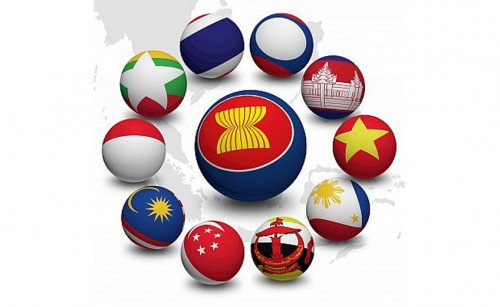
Looking at ASEAN, intra-regional trade accounts for approximately 24%, demonstrating the strength of regional connectivity. By contrast, this figure is only around 1–2% in South Asia, where trade between neighbouring countries is extremely limited. Japan’s support through JICA, including for ports, roads, bridges and logistics networks along the East-West Economic Corridor, symbolises the long-standing cooperation between Japan and Thailand. ASEAN has gained considerable strength from dynamic intra-regional trade and investment, which support growth for both ASEAN and Japanese companies.
This is ASEAN’s core strength, enabling companies in Thailand to tap into a vast market and resilient supply chains. Losing this advantage would risk forfeiting one of ASEAN’s most distinctive sources of competitiveness. Therefore, maintaining and further strengthening this “connectivity” must remain a top priority. Japanese companies will continue to view ASEAN as an integrated economic community and work together with the region to promote sustainable growth and supply chain development.
What advice would you give Thai as well as Japanese entrepreneurs who would like to invest or do business in Japan or Thailand, respectively?
Many Japanese companies that have succeeded in Thailand have done so by consistently cultivating local talent, pursuing quality and contributing to the communities around them. Over time, these efforts have formed an invisible but highly valuable kind of capital that has supported Thailand’s industrial development.
A key question for all of us is, “Where do we go from here?” The global market is becoming increasingly fragmented and depending on how local procurement and local content policies evolve in Thailand, new challenges may arise. Companies are now asking, “What can weproduce here in Thailand that can be exported to the rest of the world, including Europeand the United States?” At present, there is no definitive answer as to which products or technologies will be accepted where. This is an issue that many businesses will be watching very closely.
However, with the right strategies and coordinated efforts, there is tremendous potential. If Thailand and its partners can work together in a well-organized and forward-looking manner, I am confident that Thailand will keep growing and prospering as it always has.
How do you envision Japan and Thailand deepening cooperation in sustainable business practices, particularly in sectors such as manufacturing, energy andagriculture?
Thailand has set the goal of achieving carbon neutrality by 2050 and is advancing the Bio-CircularGreen (BCG) Economy. Japan stands ready to support Thailand in this journey by sharing our knowledge and experience in decarbonization technologies, renewable energy and circular economy systems, working together to promote a successful green transition.
Opportunities include developing higher-valueuses of agricultural by-products, advancing bio-based materials and improving energy efficiency in the industrial sector. Thailand’s growing emphasis on circular production in the food, materials and energy sectors aligns well with Japanese strengths in waste minimization, process optimization and environmental qualitycontrol—areas where practical collaboration can help accelerate Thailand’s green transition.
Another important frontier lies in building a comprehensive circular-economy ecosystem. Thailand is expanding its legal and regulatory frameworks for waste segregation, recycling and extended producer responsibility, and Japan can provide practical expertise in establishing safe and reliable collection, treatment and recovery systems. This includes support for waste-to-energy options suitable for local conditions as well as approaches for closing the loop on endof-life electronics and batteries as the region moves toward electrified transport. By combining Thailand’s policy momentum with Japan’s operational know-how, both countries can create scalable models for sustainable resource use that strengthen economic resilience across the region.

What role do cultural values and business etiquette play in shaping successful Thai Japanese joint ventures?
The social values deeply rooted in Japanese culture such as diligence, sincerity, harmony and a refined sense of aesthetics, have shaped the global reputation of “Made in Japan” products, known worldwide for their durability, reliability and functionality. On the other hand, Thailand’s great individuality and flexible mindset have served as integral elements of creativity across many of its industries. These qualities significantly contribute to Thailand’s unique strengths, allowing them to shine on the global stage.
When these complementary qualities of Japan and Thailand come together, and as we embrace each other’s cultural strengths built upon our long-term relationship, I believe both countries can expect to create joint ventures that achieve sustainable success.
Are there emerging opportunities for collaboration between Japanese SMEs and Thai startups in areas such as innovative food technology, robotics
and digital transformation?
There is clear potential for new collaboration between Japanese companies and Thai startups in innovative food technology. Thai startups bring access to diverse tropical bioresources, fast-growing consumer markets and agile product development. Japanese businesses can complement this with strengths in fermentation, process engineering, quality control and regulatory compliance for export markets. Joint development of “Thai-origin, Japan-quality” functional foods and ingredients—using local crops, duckweed, algae and agricultural by-products—could target not only Thailand but also wider ASEAN and Japanese markets.
Robotics and digital transformation form another complementary field. Thailand’s manufacturing sector face rising labour constraints,creating strong demand for affordable automation, factory-floor DX and data-driven productionsystems. Japanese businesses can provide reliable sensors, mechatronics and system-integration know-how while Thai startups excel in fast prototyping and platform development. There is also room for space-based solutions such as satellite data for infrastructure monitoring, disaster-risk mapping and climate-adaptive agriculture, where Japanese technical depth and Thai deployment capacity can combine effectively.
Are there emerging opportunities for collaboration between Japanese SMEs and Thai startups in areas such as innovative food technology, robotics and digital transformation?
There is clear potential for new collaboration between Japanese companies and Thai startups in innovative food technology. Thai startups bring access to diverse tropical bioresources, fast-growing consumer markets and agile product development. Japanese businesses can complement this with strengths in fermentation, process engineering, quality control and regulatory compliance for export markets. Joint development of “Thai-origin, Japan-quality” functional foods and ingredients—using local crops, duckweed, algae and agricultural by-products—could target not only Thailand but also wider ASEAN and Japanese markets.
Robotics and digital transformation form another complementary field. Thailand’s manufacturing sector face rising labour constraints, creating strong demand for affordable automation, factory-floor DX and data-driven production systems. Japanese businesses can provide reliable sensors, mechatronics and system-integration know-how while Thai startups excel in fast prototyping and platform development. There is also room for space-based solutions such as satellite data for infrastructure monitoring, disaster-risk mapping and climate-adaptive agriculture, where Japanese technical depth and Thai deployment capacity can combine effectively.
How are Japanese corporations in Thailand adapting to align with Thailand’s Bio-Circular-GreenBCG economic strategy?
In the bio sector, Thailand—as a major agricultural nation—possesses abundant biomass resources and has built a strong foundation for a bioeconomy that spans a wide range of industries, from food and energy to chemical materials, pharmaceuticals, health products and functional foods. Thailand ranks among the world’s top producers of key agricultural crops such as sugarcane, cassava, palm oil and rice (including rice straw). Utilising the by-products and agricultural residues from these crops, the country is making steady progress in developing high-value-added products, including biofuels, biochemicals and bioplastics.At the same time, efforts are being made by both domestic and international companies and research institutions to reframe these bioresources as valuable materials from a waste-management and recycling perspective, integrating them into a circular economy that connects agricultural, industrial and urban activities. With its role as a processing and logistics hub within ASEAN,
Thailand is well-placed to build supply chains that emphasise circularity and reuse from raw-material procurement to product export. Through technology collaboration, investment and human-resource development in these areas, Japan is committed to supporting Thailand so that the BCG economy can drive Thailand’s sustainable growth and reinforce ASEAN’s competitiveness as a whole.
Since coming to Thailand, what has impressed you most?
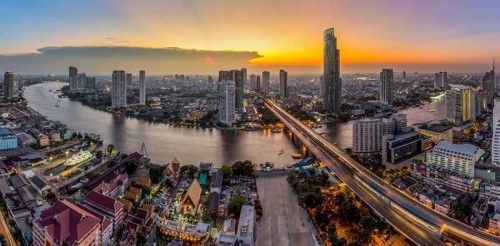
Thailand has a special atmosphere where the old and the new blend naturally. In Bangkok, for example, you can often see golden temples standing side by side with modern skyscrapers. These scenes show
Thai society continues to value its cultural roots, even as the country continues to modernise.
Thai people also reflect this harmony. In their daily lives, they value the calmness and courtesy shaped by Buddhist traditions, yet they embrace new values with an open heart. Because of this, visitors feel a warm sense of comfort, even in the middle of the
busy city.
Even as modernisation moves forward, Thai people continue to hold on to the traditions and values that define their identity.
To conclude, do you have any last thoughts you would like to share with our readers?
As we reflect on the longstanding friendship between Japan and Thailand, we continue in our efforts to further strengthen this tie between our two countries. Looking ahead to the 140th anniversary of the establishment of diplomatic relations between Japan and Thailand in 2027, I believe we can further deepen economic development, regional peace and the bonds between our peoples, forging a new era together.