

By Kathleen Pokrud
Photos courtesy of Embassy of Oman, Bangkok
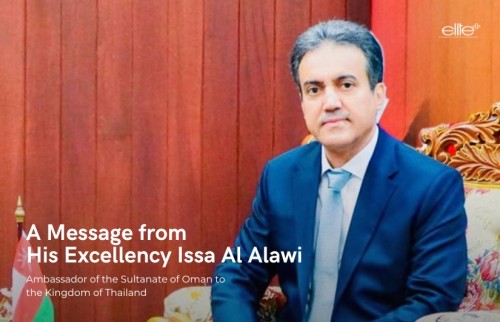
Nestled on the south-eastern edge of the Arabian Peninsula, Oman faces a delicate challenge: how to ensure food security. Yet, by merging traditional wisdom with modern innovations, Oman is shaping an inspiring story of resilience and environmental sustainability. For this article, I sat down with H .E. Ambassador Issa Abdullah Jaber Al Alawi to discuss Oman’s journey towards food security and sustainability.
Oman has emerged as a regional leader in food security and sustainability, relying on strategic planning, innovative technologies, and a strong commitment to long-term resilience. Based on "Oman Vision 2040", the Sultanate has made remarkable achievements in developing its agricultural and fisheries sectors to ensure food availability, affordability and environmental stewardship.
_1092889487.jpg)
Ambassador Issa began by saying that the issue of food security has been a concern of the Government of Oman. He explained, “The Omani government gives food security a prominent strategic priority within ‘Oman Vision 2040’ to achieve self-sufficiency and diversify the sources of the national economy. This attention has been demonstrated through the launch of 30 projects in the agriculture and fisheries sectors to enhance local production, with investments reaching five million Omani rials for wheat production. The government also organised the ‘Sustainable Food Security Forum 2025’ that focuses on innovation in agriculture, fisheries and water resource management. These efforts reflect a commitment to providing safe and sustainable food in the face of global challenges.”
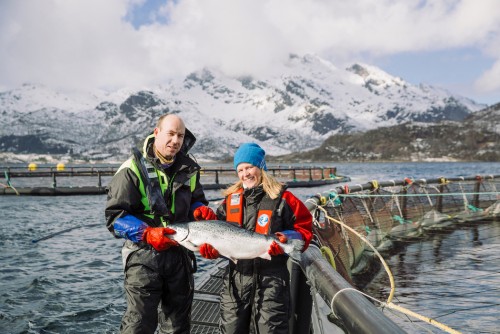
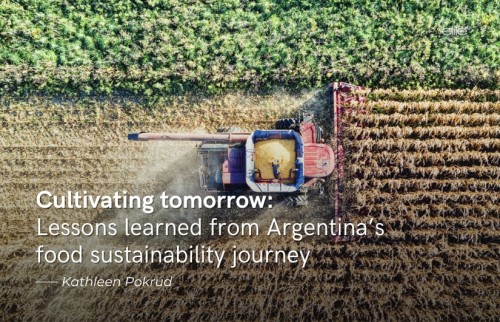
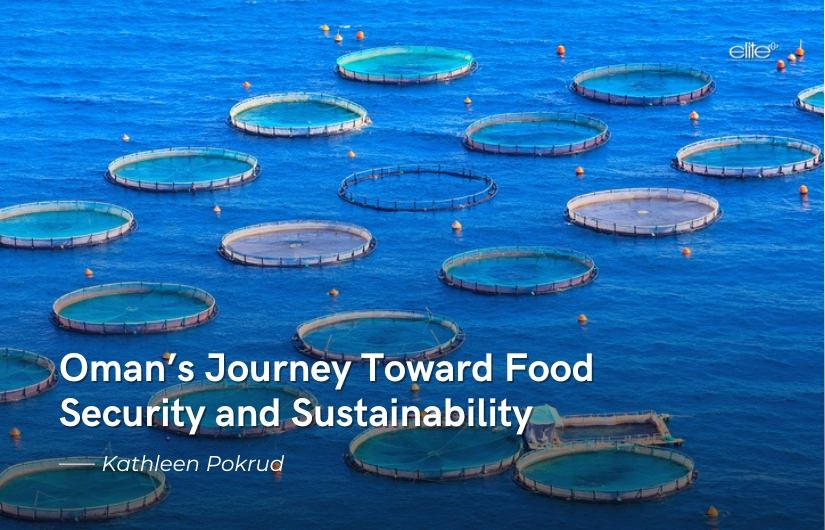
In today’s interconnected world, Oman achieved a food self-sufficiency rate of 65.8% in 2024, meaning it imports about 34.2% of its food needs according to official estimates. Recognising the vulnerability this creates, the government has placed food security at the heart of ‘Oman Vision 2040’. The National Food Security Strategy seeks to strike a balance between imports and local production by boosting domestic cultivation of vegetables, poultry and dairy. At the same time, it is expanding aquaculture to become a global player in seafood exports; investing in controlled-environment agriculture, including hydroponics and vertical farming, and building robust food reserves to cushion against supply disruptions.
_294178217.png)
Admittedly, the Sultanate of Oman faces challenges in terms of eco-friendly food practices or regenerative agriculture. Ambassador Issa elaborated, “The Sultanate faces challenges in adopting sustainable agriculture, most notably climate change, which exacerbates drought and reduces productivity, and water scarcity, which requires smart irrigation techniques and resistant crops. Challenges also include competition from cheap food imports and reliance on foreign labour who lack training in sustainable practices. Urban expansion poses an additional challenge as it reduces agricultural land and increases food loss. To address these challenges, the Sultanate is striving to overcome these challenges through organic farming, international partnerships and innovating resilient agricultural solutions, thus turning challenges into opportunities for sustainability.”
The Government of Oman has implemented promotion of food sustainability. The Ministry of Agriculture, Fisheries and Water Resources (MAFWR) has spearheaded initiatives that boost self-sufficiency across key food sectors. Ambassador Issa declared, “The government is adopting sustainable policies within ‘Oman Vision 2040’ to increase food production by 30% over the next decade. The food security strategy includes supporting research on drought-resistant crops and improving water management. The government has launched innovative initiatives such as establishing centres for aquaculture and algae cultivation and has invested in organic agriculture and soil protection. The government also promotes international partnerships to improve supply chains to reduce reliance on imports and support economic and environmental sustainability.”
_132079014.png)
When it comes to community and grassroot, or private sector, involvement, local markets remain central to promoting farm-to-table culture. Awareness campaigns are encouraged to reduce food waste, which is a growing issue in Gulf states. Traditional cuisine which is built around dates, fish and spiced rice reflects resourceful use of available ingredients. Ambassador Issa strongly believes that the Sultanate of Oman is witnessing active participation from the community and private sector in promoting food sustainability.
He explained, “The private sector collaborates with the government on agricultural and fishery projects as seen in the ‘Food Security Forum 2025’. Awareness campaigns are organised for organic farming and waste reduction, along with training of farmers on advanced agricultural techniques. The private sector also contributes to joint international investments that enhance sustainable development, create job opportunities and strengthen the Sultanate of Oman's position as a centre for agricultural innovation in the region.”
Ambassador Issa reiterated there are consistently future initiatives being researched. “The Sultanate of Oman seeks to enhance food security through ambitious future initiatives, including research into drought-resistant crops and expanding cooperation with the Food and Agriculture Organization of the United Nations (FAO) for innovation in agriculture and sustainable beekeeping. The ‘Blue Harvest’ project for smart water management and climate-resilient agriculture stands out. The ‘Oman AgroFood’ exhibition also supports the development of agricultural technologies, thereby enhancing the sustainability of the food system.”
_476220895.png)
Ambassador Issa also reaffirmed that the Sultanate of Oman emphasises regional and global cooperation to face food security challenges through international partnerships to exchange desert agriculture technologies and support FAO initiatives. “The Sultanate of Oman sees opportunities for regional food stability in algae cultivation and improved water management. It also calls for joint investments with other countries to develop sustainable food projects with a focus on reducing food waste and enhancing biodiversity. This vision aims for a fair and resilient global system based on innovation and cooperation.”
_883881209.png)
Oman stands as a prominent example of balancing food security with environmental sustainability. Through calculated investments in climate-adaptive agriculture, the adoption of modern technologies, and the fostering of effective public -private partnerships, Oman seeks to strengthen food systems capable of withstanding environmental and economic challenges. In an era of escalating climate risks and geopolitical tensions, Oman’s integrated and future-oriented strategy offers important lessons in building resilient and sustainable food structures.